
Two weeks before the miscarriage, the doctor showed us the lovely beating heart of our week seven fetus. Then she turned to me and said, “Gina, I’m concerned.” She said a lot of things after that about the size of the yolk sac relative to the other measurements and what this almost inevitably meant for the baby.
Miscarriage. Soon. But not yet.
That was only the beginning of the devastation that followed.
Today, I’m OK. I’m great, in fact. I’m incredibly lucky and my gratitude sometimes overwhelms me. My family is happy and healthy, but for many months, I was hanging by a thread mentally. I wanted to curl up in a ball and cry for the rest of my life or go into hibernation and only wake up again when I had a viable pregnancy. I wanted to skip the pain, the suffering, the loneliness.
Unfortunately, we all know that’s not how it works. I had to go back to teaching my classes again at some point. More importantly, I had to keep raising my son, who was four years old at the time. It was hard enough to keep my shit together in front of my students, which I managed reasonably well. I told them that I was having a hard time with some personal things and was not myself right then. They were sympathetic to my vague problems.
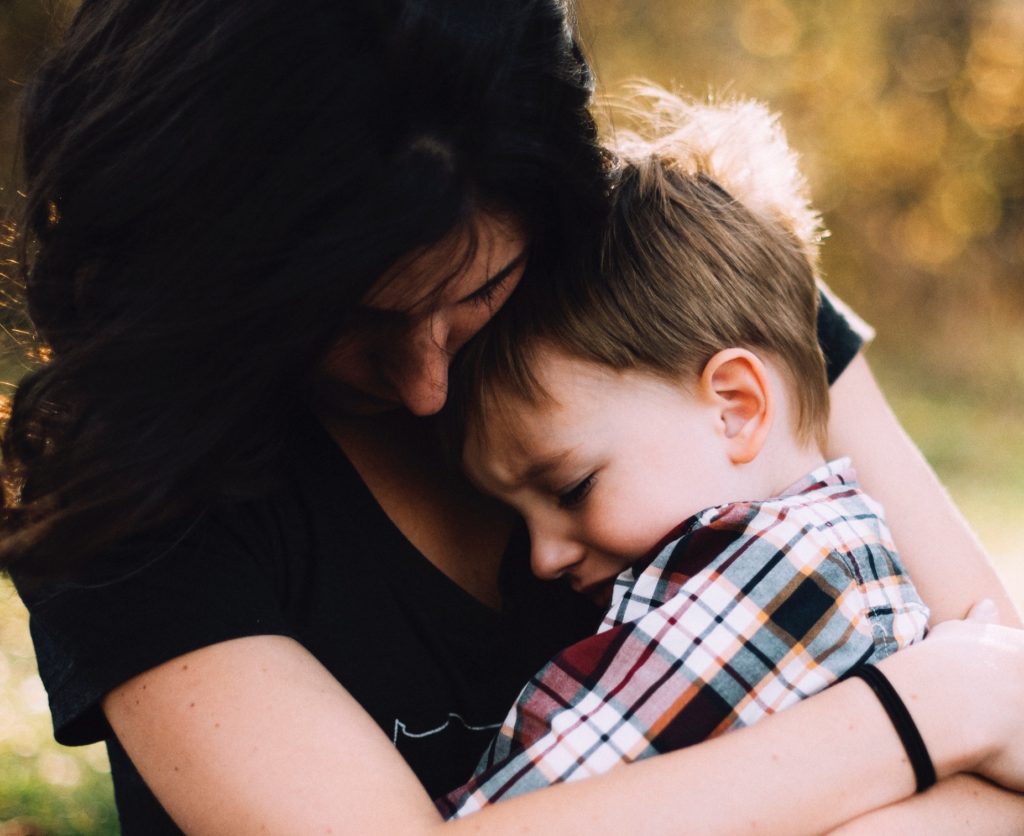
At home, I cried a lot. Almost continuously for weeks and weeks. My son saw me many times and asked why I was crying. Though I could not make him understand everything that was happening to me and to our family, I was determined not to lie to him either.
“When parents tell a child that what they know to be true, in fact is not, they cause their child to choose between trusting themselves and trusting their parents. This is not a choice a child can make and remain intact and healthy.”
“When Parents Lie,” by Kate Roberts Ph.D.
Hiding my sadness or pretending everything was fine was out of the question. Lying to children about emotions sets them up to doubt their intuition. The Psychology Today article quoted above explains the details of this dangerous practice and its lasting effects better than I could do. Even if they don’t have the maturity or vocabulary to talk in depth about difficult emotions, they nonetheless experience the same emotions as adults and they are capable of recognizing when something is wrong. We must never expect them to pretend otherwise.

I could not pretend I was fine, so what could I tell him? I was not in a state of mind for researching the best parenting sources on how to talk to children about grief, but my husband and I had agreed to be honest with our children for their own benefit. Who is ever really prepared for this kind of thing? It’s the kind of thing that happens to other people, until it happens to us.
We had to wing it.
Here’s approximately how the conversations often went:
Me: [crying on the bed, hiding from the world]
4yo: [finding me anyway] Maman, why are you crying?
Me: I’m sad, Sweetie Bird.
4yo: Why are you sad? [sits down next to me or on my lap]
Me: Because I lost something I really really wanted and I waited a long time for it.
4yo [so literal]: You can just find it again.
Me: No, Sweetie Bird. Unfortunately, it’s gone forever, so I’m very sad.
4yo: You can get another one, maybe.
Me: Yes, I hope so, but right now I’m sad about this one. This one was special. But it’s ok to be sad. I’ll be sad for a while, but I’ll be ok later. You don’t have to worry, OK?
4yo: Ok… Maman, did you know the platypus had a stinger on its foot?
In this way, we stumbled through plenty more tough moments. There were many medical interventions and many bitterly disappointing “failures” to come over the next year and a half. All that time I was conflicted over my desperate longing for another baby even though I already had such an incredible little spirit bouncing up and down right in front of me.
That’s the funny thing about babies. They’re not like money or things. Wanting more doesn’t mean you don’t appreciate or value what you already have. The desire to have a baby can be deeply visceral. It hits you on a cellular level. We are human adults, though. We can overcome these desires – in theory. We don’t have to give in to our instincts, but it doesn’t make them any less powerful.
My son is now six years old and he is the exceedingly proud big brother of an eight-month-old baby girl. She is the spitting image of him when he was a baby. Together, they form a heart meltingly adorable duo. He loves her so much and she thinks everything he does is pure comic genius.
Someday we will tell them exactly how much we wanted them both and what it took to get them. Our son probably won’t remember how sad I was for a time, but I believe part of the reason he can forget is because we told him the truth. He didn’t need to try to reconcile the difference between what he saw and what he was being told in his four-year-old brain.
Telling the truth doesn’t necessarily mean divulging every last gory detail of something a child can’t possibly comprehend. We told him the truth of our emotions. That’s how fictional stories in books and movies can make us laugh, think, or cry. The story may not be true, but the emotions are.
If you find yourself grappling with a similar situation – be it infertility, pregnancy/infant loss, the illness/death of a loved one, or something else – I hope my experience will help give you the courage to answer your children’s questions as honestly as you possibly can. They love you and they want to be there for you in their way, just like you are there for them.
This post was inspired in part by a new project by NPR called Life Kit. They are doing articles and podcasts on a range of topics including parenting. This article explains how to talk to children about death, and it got me thinking about conversations we’ve had in the past. It can be very complicated! But honesty is the best policy.
I wish you all the best on your parenting journey.